
Making Sampling Relevant
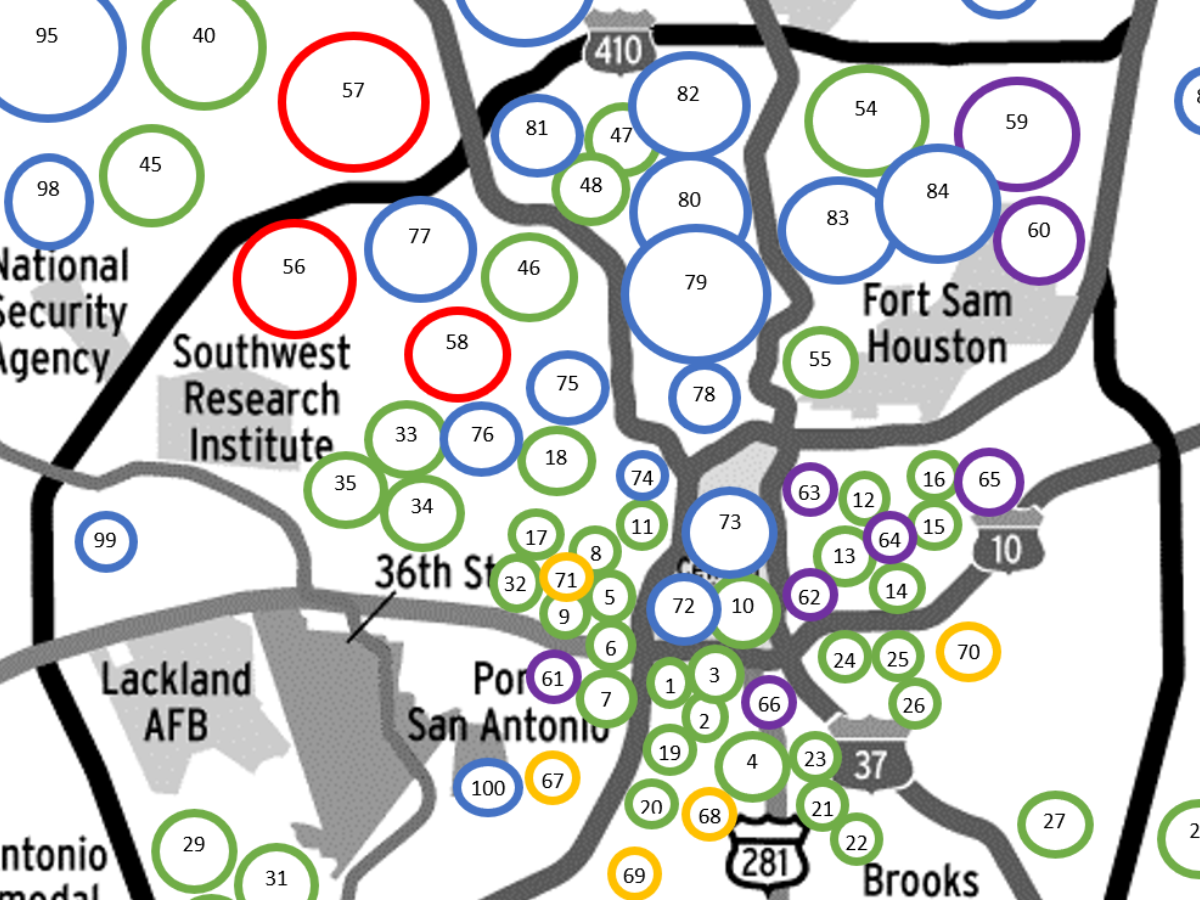
San Antonio, like many American cities, has measurable income disparities between neighborhoods. How does income segregation affect our estimates of the average income in the city? Does income segregation lead to neighborhood differences in school funding? What is the most "fair" way to distribute public funds between neighborhoods?
These are all questions that students tackle in Lesson 4.2 - Random Sampling Methods (linked below). Hands-on data collection, exploratory learning, and discussion of relevant topics - all wrapped up in one meaningful lesson. It's a great way to start off your sampling & experiments unit. Check it out below.
Let’s skew it!
Random Sampling Methods
Lesson 4.2
Sampling incomes in one of America's most economically segregated cities. Covers simple, cluster, stratified, and systematic random sampling.